Crie a sua conta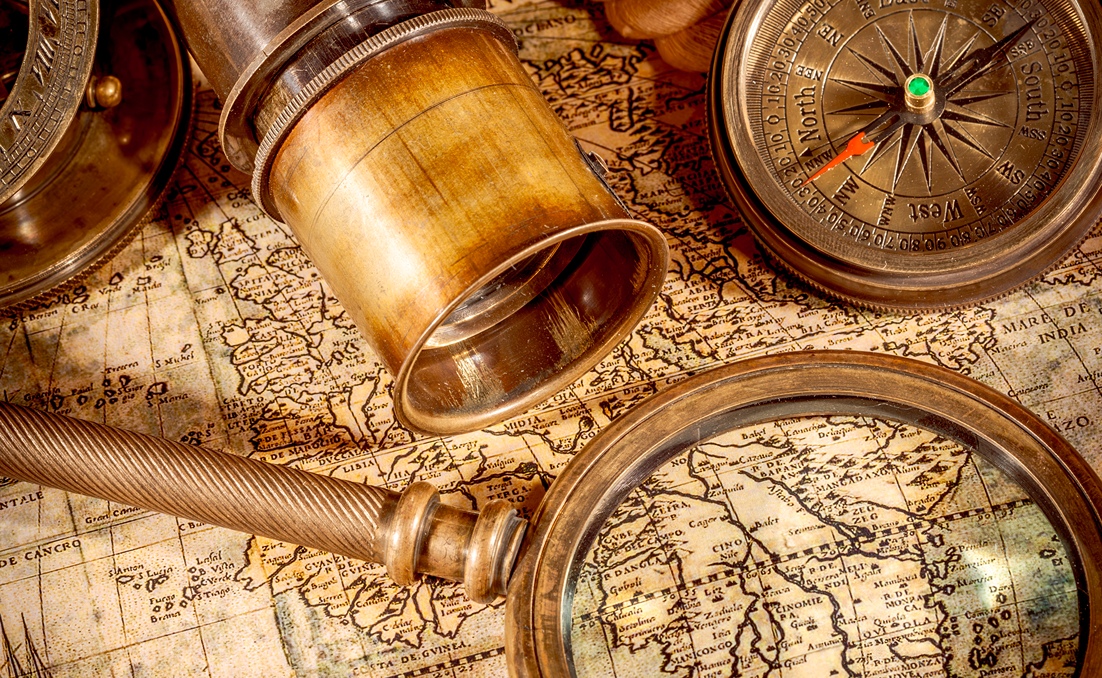
When Maps Were State Secrets
Maps, spies, pilots and valuable information: discover how Portugal tried to protect its geographical knowledge during the Age of Discoveries.
There is an image worth holding on to: a wooden ship, sails full, moving slowly away from the Tagus towards the horizon. On board, men who did not know exactly what they would find, yet they left anyway. Behind them, everything they knew. Ahead of them, the unknown.
It is tempting to look at the ocean and see an obstacle. A frontier. A natural limit separating peoples and continents. But the Portuguese navigators of the 15th century looked at the sea and saw something else: a route.
At the beginning of the 15th century, Europe’s geographical horizon was still limited. There was indirect knowledge of Africa, the Middle East and the East, but trade depended on long, expensive and dangerous routes, shaped by multiple intermediaries,Muslim merchants, Mamluks, Venetians and, later, Ottomans, all of whom increased the cost of what eventually reached European tables.
Pepper, ginger and cinnamon, spices we now find easily in supermarkets, were then luxury goods, symbols of status and wealth. The sea was respected, but also feared. The maps of the time often ended at known coastlines and, beyond that, information blended with speculation and imagination. Centuries of maritime imagery fed fears of monsters, unknown currents and seas impossible to cross. Later, Camões would give literary form to that fear through Adamastor in The Lusiads, the poetic embodiment of fear before the unknown.
It was in this context that Portugal decided, with a determination that still impresses today, to turn the ocean into a means of connection.
The goal was simple in theory, enormous in practice: to find a sea route to the East that would round Africa and allow direct access to the spice trade.
In 1415, the conquest of Ceuta opened a first chapter. It was not only a military victory — it was also a sign that Portugal was willing to look beyond its European territory. From then on, each voyage pushed the frontier of the known a little further: Madeira, the Azores, the west coast of Africa, the Cape of Good Hope and, finally, in 1498, India, with Vasco da Gama completing what for a long time had seemed impossible.
Between 1415 and 1543, the Portuguese helped connect, by sea, spaces that until then had rarely communicated directly from Europe: the Atlantic, the African coast, the Indian Ocean, Southeast Asia, China and Japan.
When we think of globalisation, we tend to place it in the 20th century, in the internet, aircraft and shipping containers. But one of the first great waves of globalisation happened at sea, more than five hundred years ago, and Portugal was one of its central protagonists.
The maritime routes established by Portuguese navigators worked as true highways: increasingly regular routes, with stopping points, supply areas, trading posts and flows of goods, people, languages and ideas that began to connect entire continents.
Lisbon became one of the major hubs in this network — a city where African gold, Asian spices, sugar from Madeira and, later, from Brazil all arrived. But it was not only goods that travelled along these routes.
Languages travelled. Portuguese became an important lingua franca of maritime trade in several parts of the world, from the Gulf of Guinea to the Indian Ocean and the Far East. Even today, there are words of Portuguese origin in the languages of Japan, India and Malaysia — small traces of this global circulation.
Plants travelled. From the end of the 15th century and throughout the 16th, products from the New World — such as maize, sweet potato, tomato and chilli pepper — crossed oceans and transformed eating habits in Europe, Africa and Asia. The Mediterranean diet we now celebrate as cultural heritage would look very different without these exchanges.
Ideas travelled. Contact with peoples, cultures and geographies previously little known to Europeans challenged maps, certainties and old ways of explaining the world. These encounters did not create Renaissance humanism, but they greatly expanded Europe’s intellectual horizon and contributed to a new awareness of the planet’s scale and diversity.
Two days after World Oceans Day, Portugal celebrates its national day. And it is no coincidence that it does so on 10 June, the date traditionally associated with the death of Luís de Camões, the poet who transformed Portuguese maritime voyages into literary epic.
The Lusiads, published in 1572, are more than a poem. They are the mirror in which Portugal chose to see itself: a small people, on a strip of land in the west of Europe, bold enough to set out to sea and, by doing so, help change the way the world understood itself.
Camões did not write only about navigators. He wrote about ambition, fear, courage, error, glory and fragility — all the things that are also part of the human adventure.
There is something very Portuguese in this combination: longing for what was, mixed with the proud awareness that it truly happened. 10 June is not a nostalgic celebration — or at least it should not be. It is a reminder that this heritage carries weight, memory and responsibility.
It is at this meeting point between memory and the present that World of Discoveries exists.
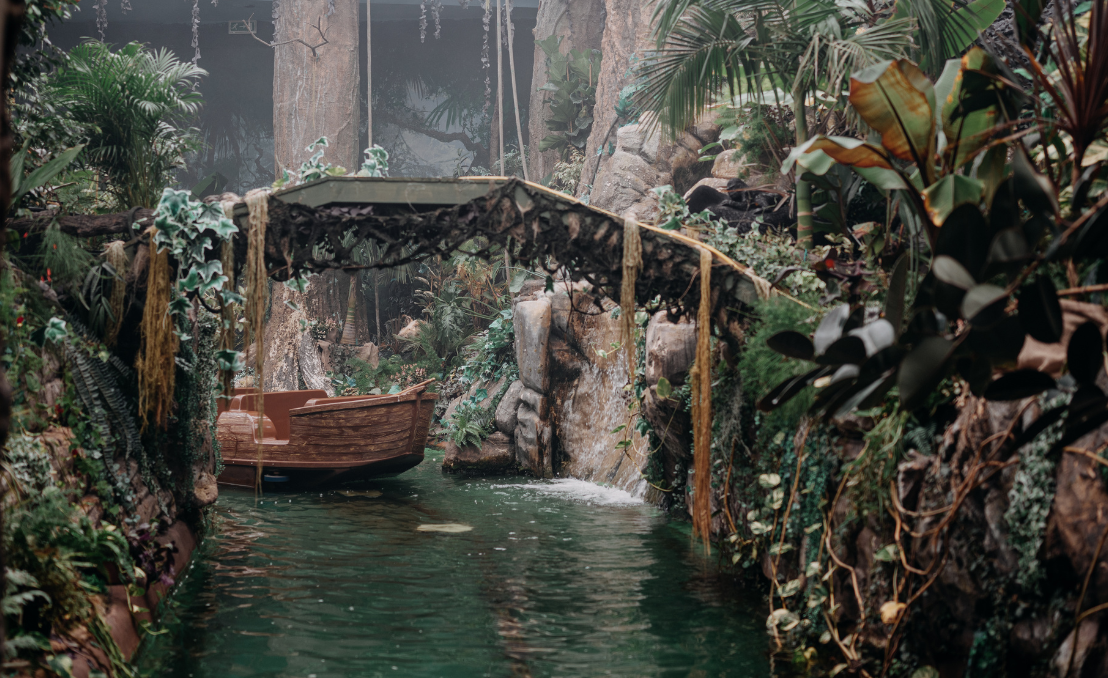
Not as an archive. Not as a simple museum of curiosities. But as a place where it is possible to feel what it meant to be on board a caravel, to face the unknown, to carry the scent of spices or hear the wind in the sails. A place where history is not simply told, it is lived.
On this World Oceans Day, and on the eve of Portugal Day, the question we propose is not only “what did the Portuguese do in the 15th century?”. It is something more urgent: what do we do, today, with this legacy? The ocean is waiting for an answer.
Come and discover this story with us. World of Discoveries is open from Tuesday to Sunday, in the heart of Porto, next to the Douro River.
Maps, spies, pilots and valuable information: discover how Portugal tried to protect its geographical knowledge during the Age of Discoveries.
Explore Porto as a family with 10 activities combining history, nature, science, animals, books and time outdoors.
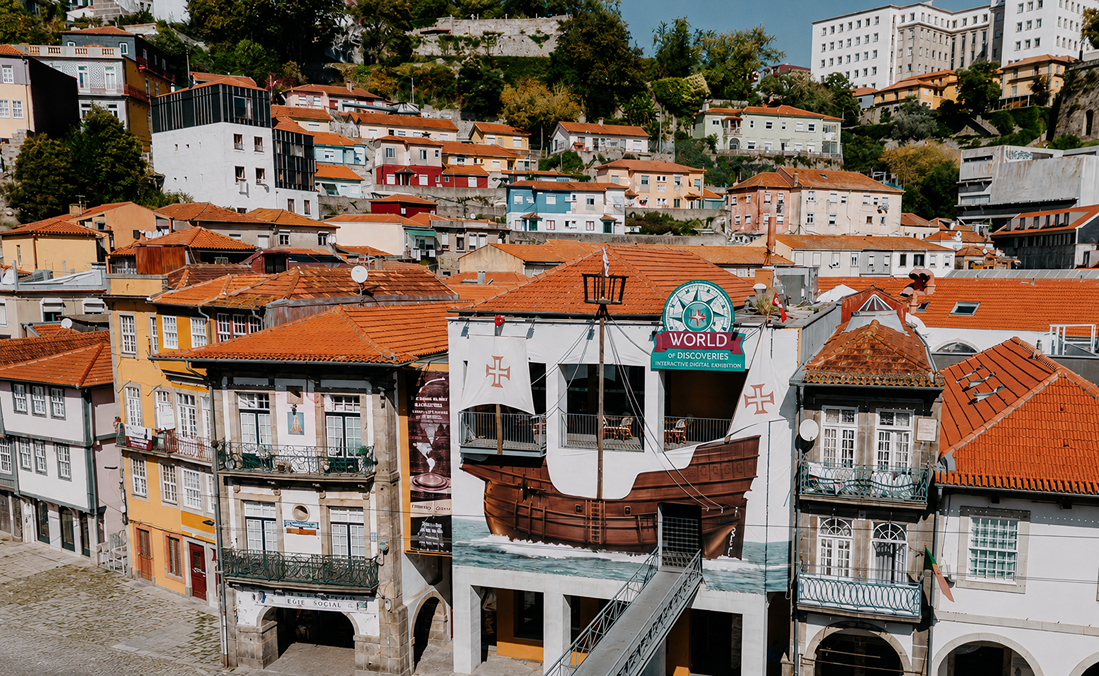
Visit World of Discoveries and explore Miragaia, a historic riverside neighbourhood where Porto’s history is still alive.
World of Discoveries
Welcome aboard the World of Discoveries! How can I assist you?
🟢 Online