The shipyard: where the adventure began (out of sight)
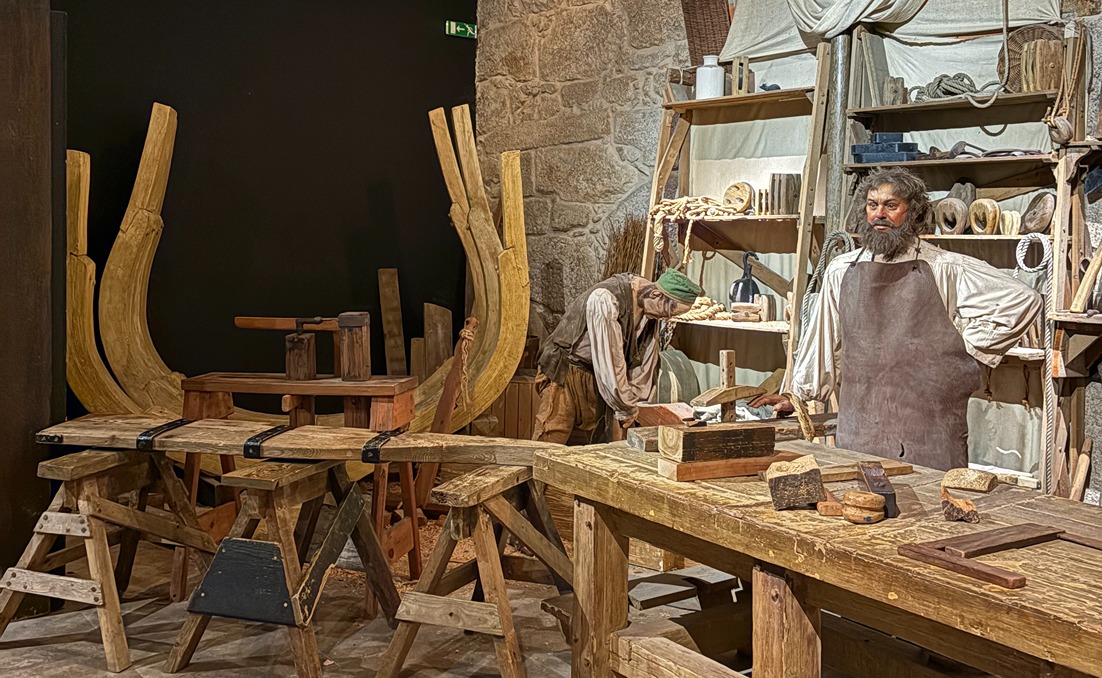
The Age of Discoveries is often imagined as sails on the horizon. But on land, the scene was different: continuous work, calloused hands, and a choreography of trades. Some shaped the hull, some made it watertight, some forged metal, and some “wove” the ship in rope and cloth. It was a collective project, built on precision and experience.
From trunk to hull: the backbone that allowed no mistakes
Everything began with the keel, the ship’s master line, on which the structure rose. Then came the framing, with ribs and pieces that defined the form: the hull’s belly, its strength, its balance. Here, every decision was technical and practical. A poorly made joint wasn’t just an “error”: it could mean leaks, lower speed, or real danger in rough seas.
Planking: dressing the ship, board by board
With the structure ready, planking followed: the hull boards, fitted with precision. Timber had to sit perfectly and follow demanding curves. The hull gained its skin, and with it, its character. Fastening could include wooden pegs, nails, and metal fittings, because timber alone isn’t enough when sustained strength is required.
Caulking: the craft of keeping the sea outside
Caulking was the moment the ship stopped being just structure and became a promise of passage. Seams were filled with fibres (such as oakum) and sealed with resinous, tar-like substances. A meticulous, repeated, essential task. Without good caulking, the ship might require constant pumping, and on long voyages, that meant fatigue, risk, and less margin for the unexpected.
Timber, iron and rigging: the ship as an organism
Timber dominated, but the ship was a system:
- Iron to reinforce and fasten.
- Rigging to control the sails and manoeuvres.
- Masts to withstand the wind’s constant strain.
- Sails as the main “engine”, always subject to wear.
And one thing was certain: the ship needed maintenance. Sails tore, ropes wore through, parts warped. Strength wasn’t only in building, it was in the ability to repair.
Caravel and nau: two answers to the same ocean
Not every ship had the same mission. And that showed in form and function. The caravel: to explore and manoeuvre. The nau: to carry, endure, and cross. Two “bodies”, two intentions, both shaped by accumulated experience, trial and error, and learning at sea.
Age of Discoveries shipbuilding was a work of technique and survival. Every plank, every seam, and every knot had a purpose: to carry people and hope beyond the horizon, and bring them back.
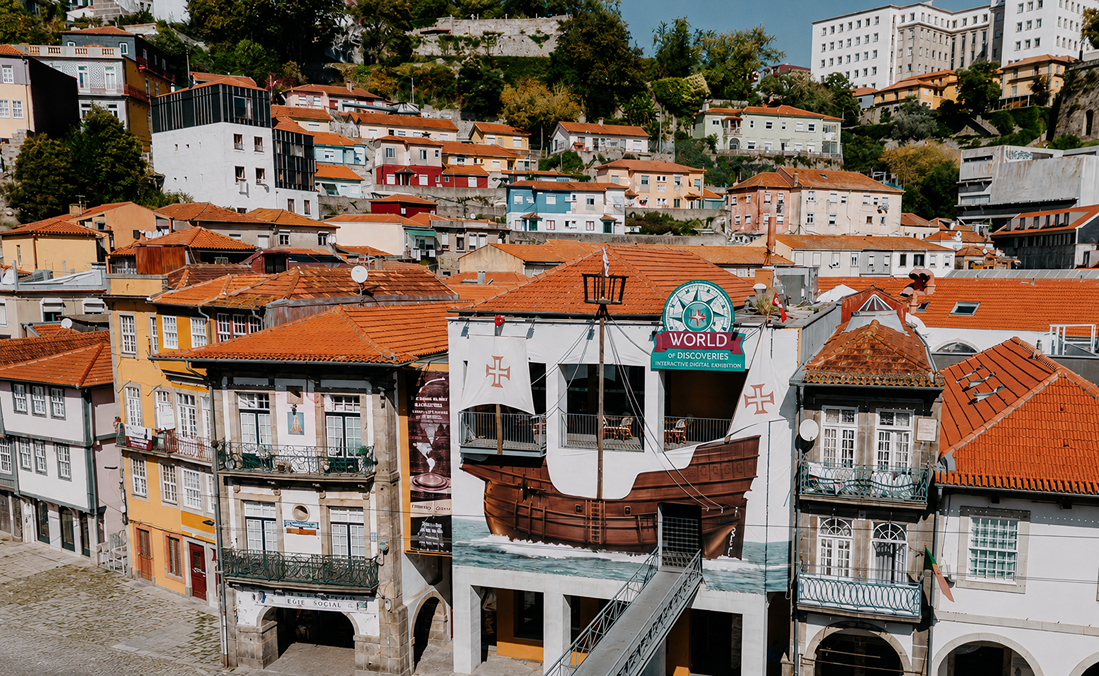
At World of Discoveries, this story takes shape through models, context and experiences that help you understand how everything began on land, long before any horizon, and then how it developed at sea.
On our Experience page, you can view a map of the museum route and read a summary of each room, providing an overview of the visit.
 Crie a sua conta